Pages

Wednesday, May 23, 2012

Writing Therapy: The Word "Can't"


source


Can't - is unable to; does not have the ability to; is forbidden to; is not permitted to

I don't like the word "can't" when it comes to a lot of things, particularly writing. The word "can't" limits, it hinders, and boxes in an individual's expression. In terms of writing therapy, "can't" can hold a writer back because they may be so focused on what they can't do according to the subjective opinions of others, and could potentially lose confidence in their writing ability.

Do you get where I'm going here?

I've read some books by "real writers" or "experts" in the writing industry, and while I appreciate the advice and understand a lot of it comes from their own personal experience, I still have an issue with an 'expert' telling me that I can't (i.e. "You can't write backstory in the first chapter," "You can't switch point of views in the middle of a chapter," "You can't write in the passive voice," etc). 

While I believe it is wise to heed advice from experienced writers in order to grow in the writing craft, I think it is also wise to carefully pick and choose the advice that works for you as a writer. To take the word "can't" too literally could have you second-guessing everything you write. 

For example, I remember taking a writing class where the Professor said "You can't write in the passive voice." I took this literally, and for years after that class I really believe that this piece of 'advice' stunted my growth as a writer. Suddenly, my work felt stilted, like I wasn't expressing what I really wanted to say, including my tone and voice. Have you ever experienced this?

When I finally broke free of the "can't," I found my writing expression was more organic, and I enjoyed writing a heck of a lot more. My philosophy is that there is no right or wrong when it comes to writing like there is in math for example. The only real question is, does your writing resonate with your intended readership? If it doesn't, then edit it! 

Maybe I'm all wrong about this, after all, I'm not an "expert," just a humble writer who would rather remove writing barriers like "can't," in order to open up a world of possibilities and encourage fellow writers to express themselves authentically.

Wednesday, May 16, 2012

Musings: Writing to Empower


source

So I call this my 'Musings' section--I try writing one once a month. Basically, it's just my reflections on anything that has to do with writing in the broader scheme of things. Today, it's about empowerment, specifically, female empowerment.

Recently, I got a part-time position as an Outreach Program Supervisor at a local women's shelter. My new job has me developing, facilitating and evaluating a curriculum targetted toward young women ages 16-21 who may have issues with self-esteem, self-confidence, body image and so on. In addition, the program teaches leadership skills to empower these women to have a voice in their community.

I'm excited about the position, though thinking at times that I'm a little crazy because I'm still a full time mom, have editing jobs on the side, and oh ... there's that little interest of mine called 'writing,' but I think this is a great opportunity to contribute something positive to my community.

So how does this relate to writing? I'm thinking about how I would like to go about developing a curriculum for the program. Since the program is all about self-expression and voice, I'm thinking of incorporating some type of writing component in it, but I'm just not sure how to go about doing it. I certainly don't want to intimidate these women--get them to write a speech about themselves and present to the class.

So how do I assist in improving their self-esteem and self-worth while using writing as a tool without making it seem like a big, scary classroom?

Any suggestions?

Wednesday, May 9, 2012

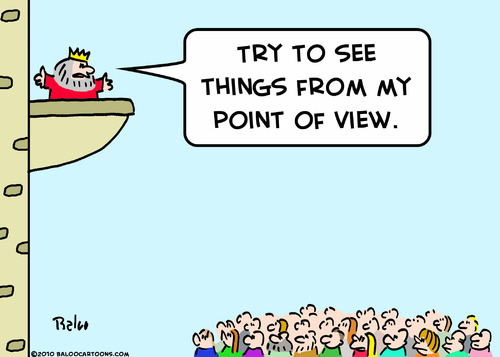
Editing Tips: Point of View


source

What Point of View (POV) do you usually write in? First person, Third? Do you prefer the omniscient POV (i.e. the narrator knows everything that is going on with their characters ... feelings, thoughts, motivations, backgrounds) or do you prefer to not go 'there' and let the characters' actions speak for themselves.

I, myself, prefer to write in First person POV. It feels more intimate to me and I find it easier to stay in one person's head instead of switching voices and perspectives. Of course, this type of POV has its limitations, for example, you're stuck with that character. If something else is happening in another room, your character can't observe it if she's not in that room.

I've come across various techniques that authors use in terms of POV to tell their story. I quite like the way 'A Game of Thrones: A Song of Ice and Fire' is written, with every chapter in the head of a different character. It works, and the reader can be all over the world and not just stuck in one character's head. Then again, if an author is to use this type of POV technique, the characters need to be well fleshed out and interesting enough that the reader will care about their POV.

POV can be tricky to work with though. I've read the work of some authors who write in Third person and every paragraph seems to be in a different POV. This can work if there is some type of pattern, or consistency, but if not handled with care it can become very confusing to read. My advice to beginner writers ... if you're not sure, then stick to only one character's POV, usually the character who has the most to lose, which is probably your protagonist.

Some POV Tips:
  • Don't jump from what one character is thinking to what another character is thinking... usually this doesn't work because if the reader think she's reading from the POV of one character, to know the other character's thoughts doesn't seem believable--i.e. can character number 1 mind read? 
  • If you have to change POVs in the middle of a chapter, try to do so with a page break to clearly indicate that a scene is over so you can start fresh in another character's mind.
  • Try to write from the POV of the character who has the most to lose in the scene because it will raise the stakes and most likely engage the reader more.
That's all for now. See ya next Wednesday!

Wednesday, May 2, 2012

Insecure Writers: Patience is a Virtue

“Patience is a virtue.” – A nice boss-


Just when I was about to take a rest from the A-Z Blogging Challenge, the first Wednesday of the month pops up (*sigh*), but no worries! It’s Insecure Writers Wednesday and there are always a plethora of insecurities to discuss—kind of sad actually L

Will any of us ever get to the point where we can feel secure within, I mean even if things aren’t working out on the writing front (or any other front for that matter)? That’s a huge topic. Certainly not something I’m prepared to blog about today.

So … back to my insecurity for the month of May. Impatience. I’ll be the first to admit that I’m not the most patient person, and, oh, how I admire the quality of patience; the ability to not be in such a rush, rush, rush, all the time, and the skill of waiting, allowing something to develop on its own time. When I was younger, a nice boss kept repeating the phrase to me, “Patience is a virtue,” and that it is.

I would like to think I have developed a bit more patience throughout the years, but I still have a long way to go. In terms of writing, I have been rather impatient lately—okay, more like forever! I want my novel edited and polished now. I want to complete a few short stories that have been buried in my files today. And I want to start sending more things out to agents and publishers now, now, now!

There is a fear inside of me that nags, “If you don’t send it soon, you’re going to miss the wave.” I write YA fiction like many other writers, and now it seems like YA is still hot, but by time I finish making my manuscript as “perfect” as it can be, then write the queries, the synopses, etc, etc … maybe I’ll be something like eighty years old and an agent will say, “You missed it, kid. YA was so early 21st century.” Alright, a bit of an exaggeration, but do you know what I’m saying?

In addition, I get impatient with myself. Being the mother of two very young children, sometimes finding the time (and energy) to write even two hours a day is quite a feat. For example, I set out weekdays to write for 2 hours a day while the kids are napping/resting, but by the time they are settled down, the house gets so quiet. It makes me so zonked that sometimes I say, “to heck with writing today!”

So I guess I’m confronting my impatience with respect to writing.  I’ve realize that I cannot be so hard on myself when I have other responsibilities (important ones at that with children)! And personally, I would rather write one good book that I really did the best I could on, than plow through several that are not my best work, especially when I don’t have any set deadlines from a publisher (yet ;) This can only be achieved by patience.

Do you struggle with impatience at times?